
Brew It Right.Your Guide to Brewing Better Coffee
Every Bean Has a Story. Every Brew Tells It Differently.
Great coffee is more than a beverage. It is an artisanal experience shaped by the origin of the beans, the freshness of the roast, the grind, the water, and the way you brew it.
From the mist-covered coffee estates of India's Western Ghats to the unique high-altitude micro-lots of Araku Valley, every coffee has its own character waiting to be unlocked.
Whether you enjoy a traditional South Indian filter coffee, a bold French Press, or a delicate pour-over, the right brewing method can bring out a whole new world of aroma, flavour, and texture.
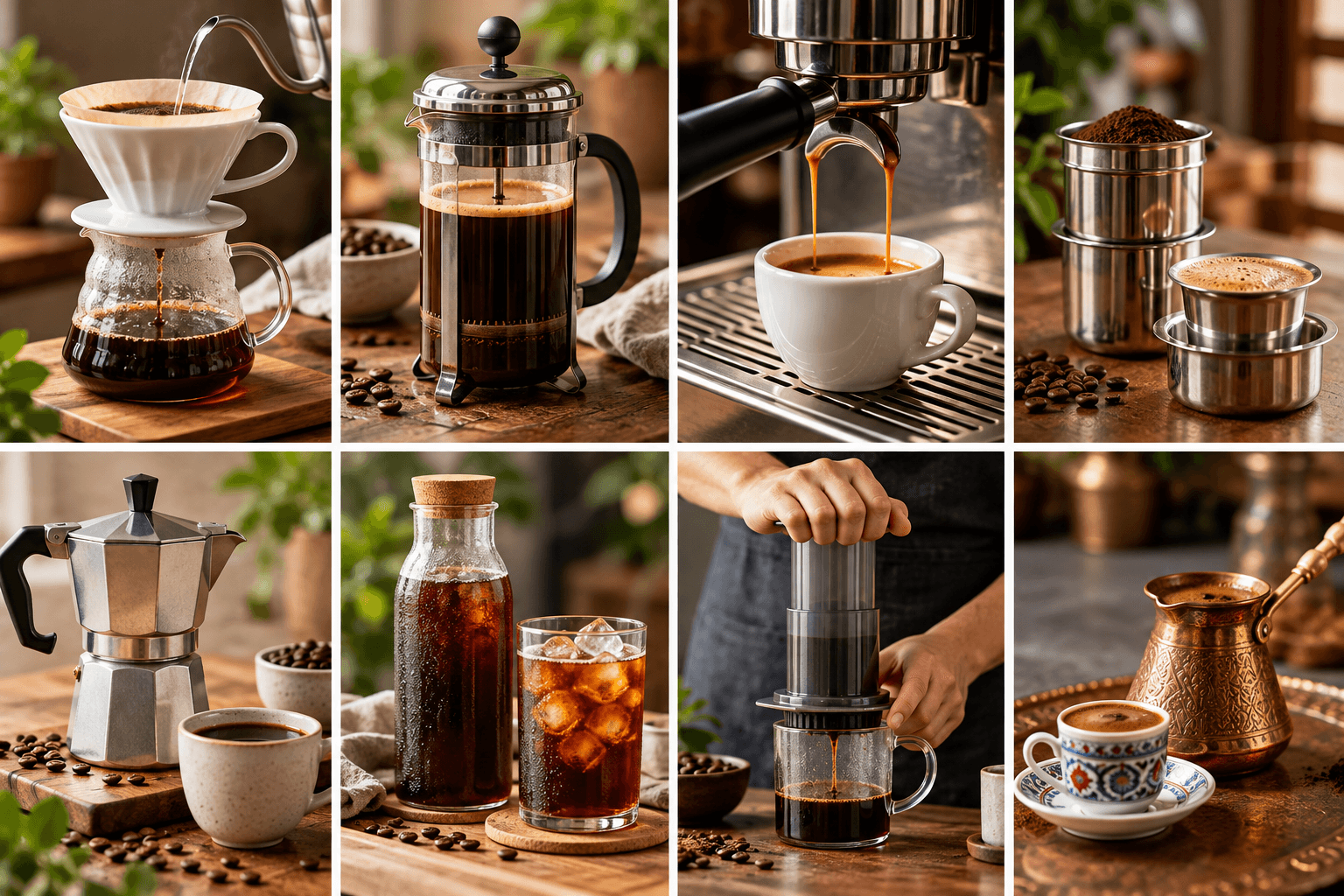
Editorial Collection
11 Artisanal Brewing Styles • One Valley Heritage
How to Choose Your Brewing Method
Select what you love in a cup, and we will guide you straight to the perfect brewer.
The Art of Brewing Coffee
The same coffee beans can deliver remarkably different experiences depending on how you brew them. Some methods create a rich, full-bodied cup, while others reveal delicate floral notes, fruity flavours, and a clean finish.
Pour-Over Coffee
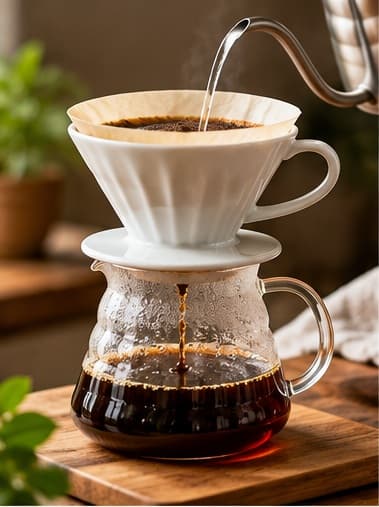
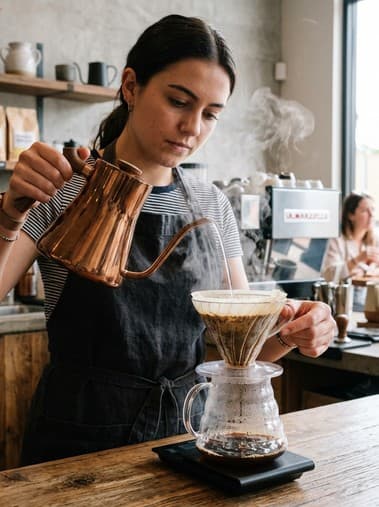
01. Pour-Over Coffee
Hot water is poured slowly over freshly ground coffee in a filter. The water passes through the grounds and into a carafe or cup, producing a clean, balanced brew that can highlight the distinctive flavours of single-origin coffees.
How to brew5 Steps
- 1Place a paper filter in the dripper and rinse it with hot water to remove paper taste and preheat the vessel.
- 2Add medium-ground coffee and gently tap the dripper to level the coffee bed.
French Press
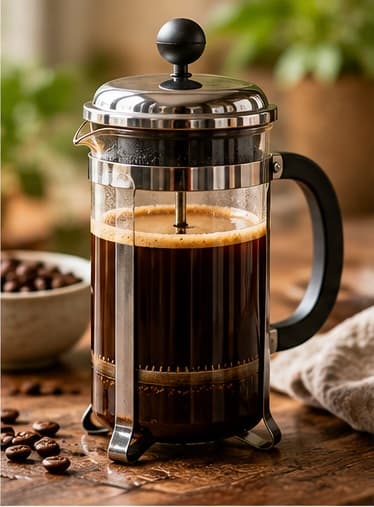
02. French Press
Ground coffee steeps directly in hot water before a metal plunger separates most of the grounds. Because there is no paper filter, more natural coffee oils and fine particles remain in the cup, creating a velvety, fuller texture.
How to brew5 Steps
- 1Add coarse-ground coffee directly into the pre-warmed French Press carafe.
- 2Pour hot water evenly over all the coffee grounds, ensuring complete saturation.
Espresso
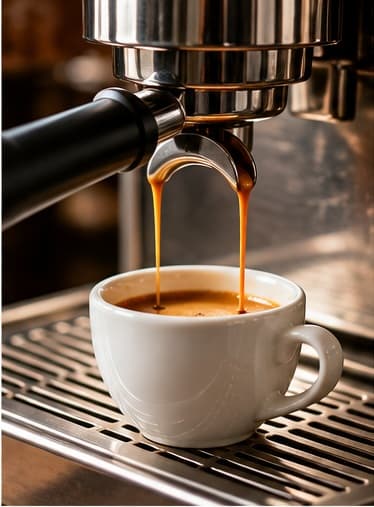
03. Espresso
An espresso machine forces hot water through finely ground coffee under pressure (around 9 bar). The result is a small, concentrated serving crowned with an aromatic hazelnut-colored crema. Espresso is also the foundation of cappuccinos, lattes, flat whites and Americanos.
How to brew5 Steps
- 1Use a fine, consistent grind and dose the portafilter precisely according to your basket size (typically 18g).
- 2Distribute the grounds evenly across the basket and tamp level with firm, even pressure.
South Indian Filter Coffee
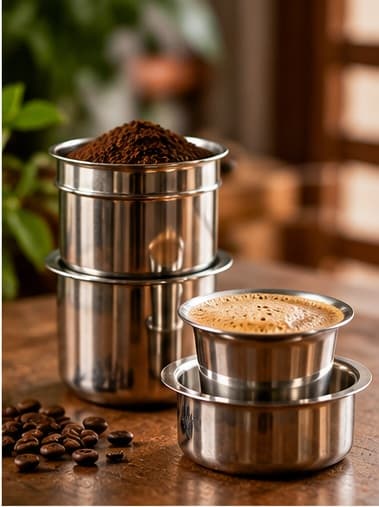
04. South Indian Filter Coffee
Finely ground coffee is placed in a perforated metal filter chamber. Boiling water slowly drips through the grounds, collecting a thick, concentrated decoction in the bottom chamber. Combined with hot frothed milk and sugar, it is served in a traditional brass dabarah and tumbler.
How to brew5 Steps
- 1Fill the upper perforated chamber of a clean South Indian brass or stainless steel filter with finely ground coffee.
- 2Gently level the coffee bed and place the pressing umbrella disc lightly on top without packing it rock-hard.
Moka Pot
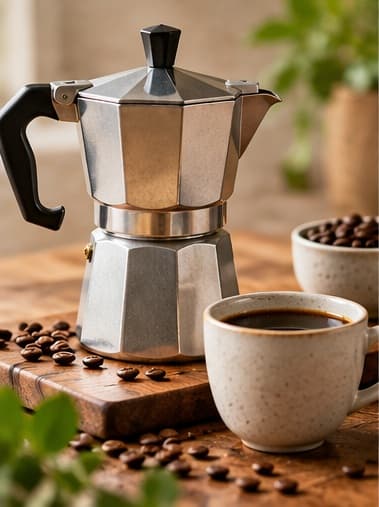
05. Moka Pot
Water heated in the bottom chamber produces steam pressure, driving boiling water up through ground coffee into the top collection chamber. The resulting brew is thick, bold, and richer than regular filter coffee, bringing café-style intensity right to your stovetop.
How to brew5 Steps
- 1Fill the bottom chamber with preheated water up to just below the brass safety valve.
- 2Fill the funnel filter basket loosely with medium-fine coffee; level it flat without tamping down.

Cold Brew
06. Cold Brew
Coarsely ground coffee steeps in cold or room-temperature filtered water for an extended duration, usually 12–24 hours. Because cold water extracts fewer bitter acids, the resulting brew is remarkably smooth, naturally sweet, low in acidity, and perfect over ice.
How to brew5 Steps
- 1Combine coarsely ground coffee with clean, cold filtered water in a glass jar or cold brew pitcher.
- 2Stir gently with a spoon to ensure every coffee ground is evenly saturated.
AeroPress
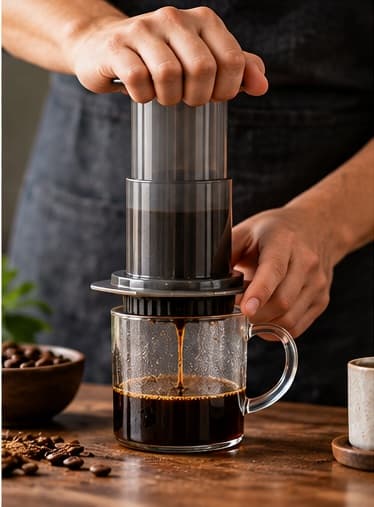
07. AeroPress
This ingenious, lightweight brewer combines immersion steeping with gentle manual pneumatic pressure to push coffee through a micro-filter. Highly adaptable, you can tweak grind, water temperature, and time to produce anything from bright filter coffee to concentrated espresso-like shots.
How to brew5 Steps
- 1Place a circular micro-filter into the filter cap and rinse thoroughly with hot water.
- 2Assemble the AeroPress chamber over a sturdy mug and add freshly ground coffee.
Turkish Coffee
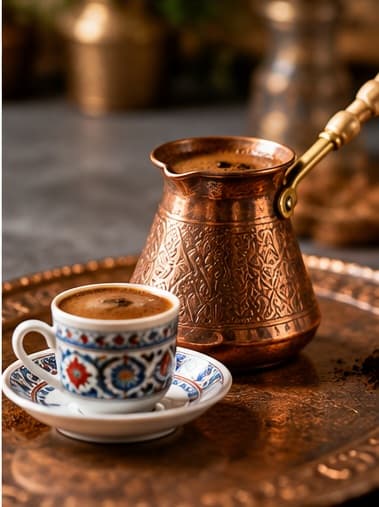
08. Turkish Coffee
Extremely fine, flour-like ground coffee is heated with water and optional cardamom or sugar in a traditional long-handled copper pot called a cezve (or ibrik). Served unfiltered, the fine grounds settle naturally at the bottom of the demitasse cup, yielding an intensely aromatic, thick brew.
How to brew5 Steps
- 1Add one heaping teaspoon of ultra-fine coffee and cold water to the cezve; add sugar to taste if desired.
- 2Stir gently before placing on heat until the coffee and sugar are thoroughly dissolved.
Drip Coffee (Batch Brew)
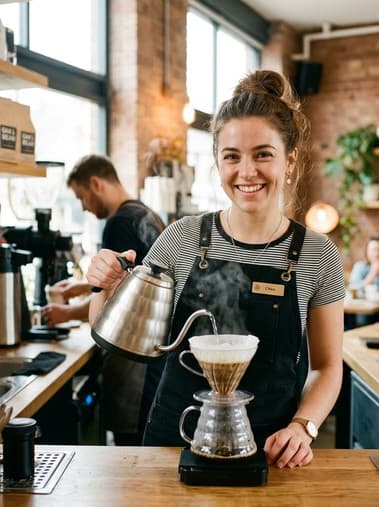
09. Drip Coffee (Batch Brew)
An electric drip machine automatically heats water to the ideal brewing temperature and showers it evenly over coffee grounds in a conical or flat-bottom filter. The brewed coffee drips into a glass or thermal carafe, making it effortless to brew multiple cups with minimal hands-on time.
How to brew5 Steps
- 1Insert a fresh paper or gold-mesh filter into the brew basket and add fresh medium-ground coffee.
- 2Fill the machine reservoir with clean, cold, filtered water up to the desired cup line.
Siphon Coffee (Vacuum Pot)
10. Siphon Coffee (Vacuum Pot)
A vacuum coffee maker uses thermal expansion and vapor pressure to draw boiling water from a lower glass flask up into an upper steeping chamber. Once brewed, removing heat creates a vacuum that pulls the crystal-clear brew through a cloth filter, producing unmatched aromatic clarity.
How to brew5 Steps
- 1Add boiling water to the lower glass flask and attach the cloth filter securely in the upper funnel chamber.
- 2Apply the burner beneath the flask. As the water boils, steam pressure forces the water up into the upper chamber.
Vietnamese Phin Coffee
11. Vietnamese Phin Coffee
A charming, compact stainless steel or aluminum gravity filter sits directly on top of your glass. Hot water drips slowly through densely packed coffee grounds, creating a thick, intensely rich brew traditionally layered over a luscious base of sweetened condensed milk.
How to brew5 Steps
- 1Add 1 to 2 tablespoons of sweetened condensed milk into the bottom of a transparent glass.
- 2Set the phin plate and brew chamber on top of the glass, then add medium-fine coffee and gently shake to level.
Precision Ratio Calculator
Select your brew method and slide your coffee dosage to instantly calculate the ideal water volume.
The Secrets to a Better Cup
Four fundamental rules to unlock extraordinary cup sweetness, clarity, and aroma every morning.
Start with Quality, Fresh Coffee
Choose freshly roasted beans suited to your preferred brewing method. Pure Valley beans are ethically sourced from the high-altitude misty slopes of the Western Ghats and Araku Valley. Grind your whole beans just moments before brewing to protect delicate volatile aromatics.
Get the Grind Right
Fine grinds generally suit espresso and South Indian filter coffee; medium grinds suit pour-over and drip methods; and coarse grinds work best for French Press and cold brew. The ideal particle size governs how fast water extracts flavor.
Pay Attention to Water
Coffee is 98% water. Always use fresh, clean, filtered water free of excessive hardness or chlorine. For hot filter brewing, maintain a water temperature window between 90°C and 96°C to extract vibrant sweetness without scorching.
Measure for Consistency
A digital scale transforms good coffee into legendary coffee. Start with the golden ratio of approximately 1 gram of coffee for every 15–17 grams of water for drip and pour-overs. Adjust according to your roast and taste preferences.
At-a-Glance Brewing Comparison
Compare extraction times, ratios, and characteristics across all 11 methods.
| Method | Flavor Profile | Grind | Ratio | Time | Best Pure Valley Roast |
|---|---|---|---|---|---|
| 01Pour-Over Coffee | Clean, delicate flavours | Medium | 1:15 to 1:16 | 3 – 4 mins | Araku Valley Micro-Lot Arabica |
| 02French Press | Rich texture and body | Coarse | 1:15 | 4 mins | Western Ghats 80/20 Estate Blend |
| 03Espresso | A small, intense coffee | Fine (table salt consistency) | 1:2 (18g dose / 36g yield) | 25 – 35 secs | Monsoon Malabar Dark Roast |
| 04South Indian Filter Coffee | Traditional Indian coffee | Fine to Medium-Fine | 1:4 decoction (served 1:3 with hot milk) | 15 – 25 mins | Pure Valley 70/30 or 60/40 Signature Blend |
| 05Moka Pot | Strong stovetop coffee | Medium-Fine (finer than drip, coarser than espresso) | Chamber Fill (Approx. 1:7) | 4 – 5 mins | Honey Sun Dried Specialty Roast |
| 06Cold Brew | Smooth, chilled coffee | Extra Coarse (sea salt crystals) | 1:8 (Concentrate) or 1:12 (Ready to drink) | 12 – 24 hours | Araku Arabica Light-Medium Roast |
| 07AeroPress | Quick, flexible brewing | Medium-Fine to Fine | 1:13 to 1:15 | 1 – 2 mins | Western Ghats High-Elevation Arabica |
| 08Turkish Coffee | A traditional, unfiltered cup | Extra Fine (ultra-pulverised flour powder) | 1:10 | 3 – 4 mins | Monsoon Malabar Medium-Dark Roast |
| 09Drip Coffee (Batch Brew) | Easy everyday brewing | Medium | 1:16 | 5 – 6 mins | Pure Valley Breakfast 80/20 Blend |
| 10Siphon Coffee (Vacuum Pot) | A hands-on brewing ritual | Medium-Fine | 1:15 | 2 – 3 mins | Araku High-Grown Single Origin |
| 11Vietnamese Phin Coffee | Strong coffee with condensed milk | Medium-Fine | 1:4 concentrate (15g coffee / 60ml water) | 4 – 6 mins | Pure Valley 60/40 Bold Roast |
Discover Your Perfect Brew
Every coffee has a character of its own. The right brewing method helps you discover it, whether you prefer the bright notes of a carefully prepared pour-over, the comforting richness of a French Press, or the familiar warmth of South Indian filter coffee.
“There is no single perfect way to brew coffee. There is only the way you love it best.”